Should Atlanta law firms be posting short-form video in 2026?
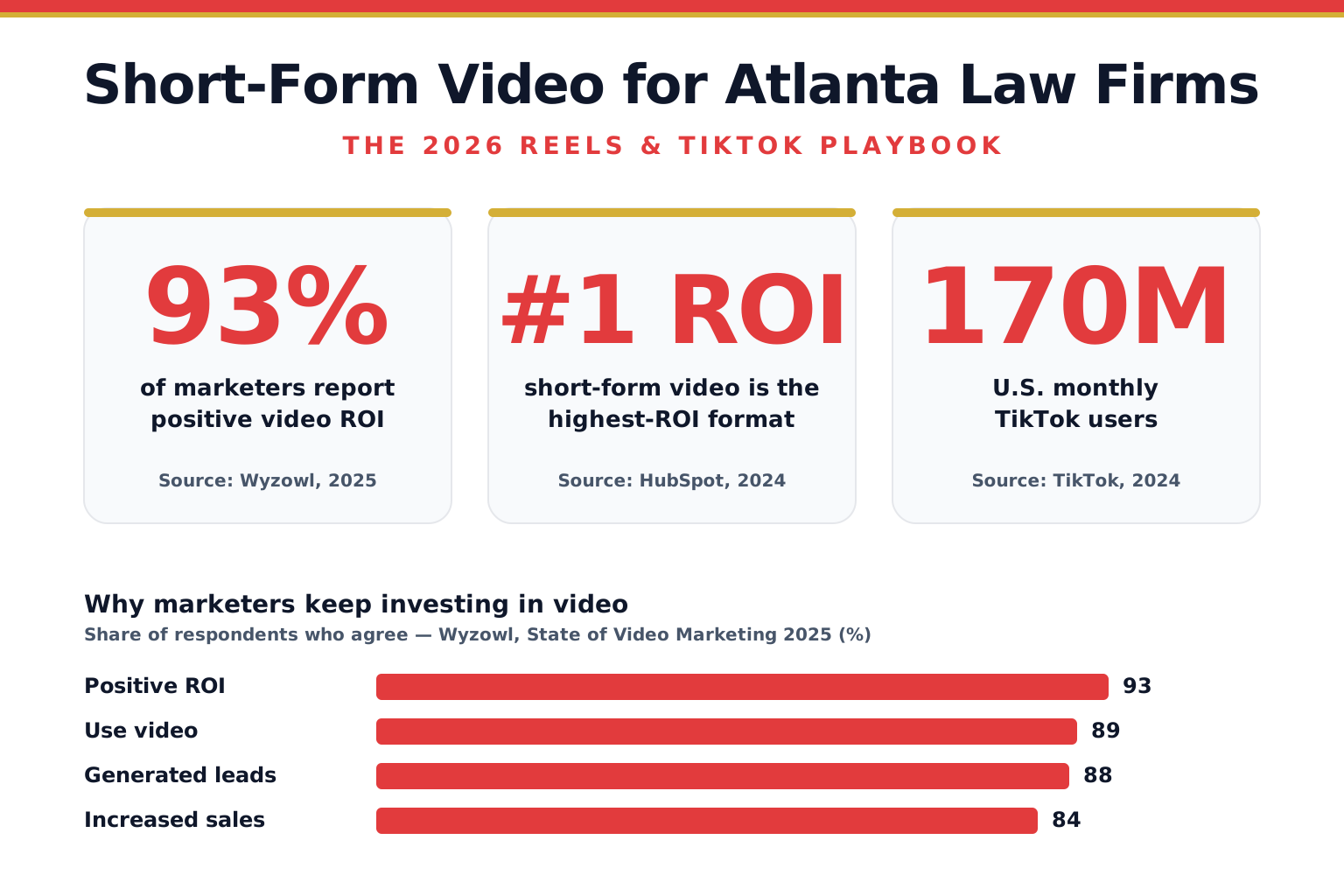
Yes — for most Atlanta firms, short-form vertical video is now the single most cost-effective way to reach clients who have never heard of you. 93% of marketers say video gives them a positive return on investment, the highest figure Wyzowl has ever recorded, and marketers consistently rank short-form video as the format with the highest ROI of any content type (Wyzowl, State of Video Marketing 2025; HubSpot, 2024 Video Marketing Report). A 30-second Reel explaining “what to do after a car accident in Georgia” can be produced once and pushed to brand-new local audiences on Instagram, TikTok, and YouTube Shorts — the exact people who will need a lawyer next month and don’t know your name yet.
That matters more in Atlanta than in most markets. Georgia has more than 43,000 active attorneys, and metro Atlanta holds the largest concentration of them in the state (State Bar of Georgia). Personal injury, family, criminal defense, and immigration firms are all competing for the same clients on the same phones. Paid search in that market is brutally expensive; organic short-form video is the channel where a solo or boutique firm can still out-work a bigger competitor without out-spending it.
This playbook is written for two readers: the Atlanta firm owner deciding whether video is worth the effort, and the agency weighing whether to offer done-for-you social to legal clients. It covers what to post, where the reach actually comes from, the Georgia advertising rules you have to respect, and — the part most “just post Reels” advice skips — how to make sure the views turn into booked consultations instead of vanity metrics.
Key Takeaways
- Short-form video is the highest-ROI content format, not a vanity play. 93% of marketers report positive ROI from video and rank short-form highest (Wyzowl 2025; HubSpot 2024).
- Reels and Shorts are a reach engine. Short vertical video is built to be shown to people who don’t follow you yet — which is exactly the audience a growing Atlanta firm needs.
- Georgia’s advertising rules apply. Video is a “communication concerning a lawyer’s services” under Georgia Rules of Professional Conduct 7.1–7.5: truthful, no promised outcomes, no misleading claims.
- Reach is worthless without intake. Only 40% of firms answer the phone and 33% reply to email from a prospective client (Clio 2024 Legal Trends Report). Video that drives DMs and calls needs an instant-response system behind it or the leads leak.
Table of contents
- Why short-form video wins attention for Atlanta firms
- What to actually post: the formats that book consultations
- Reels vs. carousels vs. static: where the reach comes from
- The compliance line: Georgia’s rules for lawyer video ads
- Views don’t sign clients — intake does
- Doing it consistently: in-house vs. done-for-you
- Frequently asked questions
Why short-form video wins attention for Atlanta firms
Legal clients don’t wake up wanting a lawyer — they wake up with a problem: a crash on I-285, an arrest, a divorce, a denied claim. In the days before they search Google, they scroll. Short-form video is how a firm becomes familiar before the moment of need, so that when the problem hits, yours is the name they already trust enough to call.
The marketing data behind this is unusually consistent. In Wyzowl’s 2025 survey, 89% of businesses use video as a marketing tool, 88% of video marketers say it has helped generate leads, and 84% say it has directly helped increase sales (Wyzowl, State of Video Marketing 2025). On the demand side, 85% of people say they’ve been convinced to buy a product or service by watching a video, and most say they’d rather watch a short video than read to understand something new (Wyzowl 2025). For a service as intimidating as hiring an attorney, a 30-second clip of a real lawyer explaining the process in plain English does more to build trust than a page of text ever will.
Why marketers keep investing in video (share of respondents agreeing). Source: Wyzowl, State of Video Marketing 2025.
The reach side is what makes this a genuine opportunity rather than a chore. Short-form platforms are designed to push good content to people who don’t follow you — the opposite of the old follower-count game. TikTok alone reports roughly 170 million U.S. monthly users (TikTok, via Forbes, 2024), and Instagram Reels and YouTube Shorts run on the same discovery-first logic. That means a single well-made clip about Georgia law can be served to thousands of people in the Atlanta metro who have never visited your website — for free.
What to actually post: the formats that book consultations
The firms that win with video aren’t the ones with the best cameras — they’re the ones who answer the questions clients are already typing into Google, in 30 seconds, on camera. You are sitting on an unlimited content library: every question a prospect has ever asked you on a consultation is a video.
Five formats do the heavy lifting for law firms:
- “What to do after…” explainers. The highest-intent format. “What to do after a car accident in Georgia,” “what to do if you’re served with divorce papers,” “what to do after an ICE detainer.” These reach people at the exact moment they need help.
- Plain-English legal FAQs. Myth-busting and process explainers — “Do I have to talk to the other driver’s insurance?”, “How long does a Georgia personal injury case take?” This is public legal education, framed carefully as general information, not advice.
- Firm-culture and attorney-intro clips. Short, human videos of your attorneys and staff. People hire people; these lower the anxiety of calling a stranger.
- Case-type “what happens next” walkthroughs. A calm, step-by-step of the process de-risks reaching out and positions you as the guide.
- Timely commentary. A new Georgia law, a local safety issue, a seasonal spike (holiday DUIs, tax-season filings). Relevance earns reach.
Two rules keep short-form video working for a law firm specifically. First, captions are non-negotiable — most feed video is watched on mute, and captions also make your content accessible. Second, every video needs a soft next step: “Questions about your situation? DM us or book a free consult.” Reach with no call-to-action is how firms rack up views and zero cases.
Reels vs. carousels vs. static: where the reach comes from
Not every post format does the same job. Short-form video is your discovery engine — the thing that reaches strangers. Carousels are your depth format for the people video brought in, and static posts mostly serve your existing followers. A healthy law-firm feed uses all three, but weights toward video for growth.
| Format | Primary job | Reaches non-followers? | Best for a law firm |
|---|---|---|---|
| Short-form video (Reels / TikTok / Shorts) | Discovery & reach | Yes — built for it | Getting in front of new local clients |
| Carousels | Depth & saves | Some | “5 things to do after a crash” mini-guides |
| Static image | Reminders & proof | Mostly followers | Reviews, results, quick announcements |
| Text / Q&A posts | Authority & SEO signals | Limited | Answering common legal questions |
Industry benchmark data consistently shows Reels reaching far more non-followers than static image posts — often several times the reach — because the algorithm treats them as discovery content (Socialinsider, Instagram Benchmarks). Carousels, meanwhile, tend to earn the most saves and time-on-post, which is why the winning cadence pairs a weekly reel (for reach) with weekly carousels (for the depth that converts a curious viewer into a lead). The point isn’t to chase one magic format — it’s to run a consistent mix so you always have shots on goal.
The compliance line: Georgia’s rules for lawyer video ads
Short-form video is fun, fast, and easy to get wrong for a regulated profession. In Georgia, a Reel or TikTok promoting your firm is a “communication concerning a lawyer’s services” and is governed by the Georgia Rules of Professional Conduct, Rules 7.1 through 7.5 (State Bar of Georgia). The practical guardrails:
- Be truthful and non-misleading (Rule 7.1). No false or deceptive statements, and nothing that creates an unjustified expectation about results. “We’ll get you the maximum settlement” is exactly the kind of promise that gets firms in trouble.
- Don’t guarantee outcomes. Past results don’t promise future ones; if you reference results, keep them factual and add appropriate context.
- Mind solicitation rules (Rule 7.3). General educational video posted to the public is fine; targeted direct solicitation of a specific person known to need legal services is a different, restricted category.
- Identify a responsible lawyer and be careful with specialization claims (Rules 7.4–7.5). Don’t imply board certification or “specialist” status you don’t hold.
The safest framing — and the one that also performs best — is public legal education, never legal advice. Explain how the law generally works, then invite people to a consultation for their specific situation. That keeps you on the right side of the rules and positions you as the helpful expert. (Standard reminder: Lawyer Snapshot is a marketing-automation product, not a law firm, and this isn’t legal advice — confirm the current rules and any pre-filing requirements with the State Bar of Georgia.)
Views don’t sign clients — intake does
Here is the mistake that quietly wastes the most money in law-firm social media: treating views as the finish line. A viral reel that generates 40 DMs and 15 missed calls over a weekend is a liability if nobody answers them until Monday. The same speed that makes short-form video powerful — instant, mobile, impulsive — is the speed at which those leads go cold.
The industry data is damning on this point. In Clio’s secret-shopper research, only 40% of law firms answered the phone and just 33% responded to an email inquiry from a prospective client (Clio 2024 Legal Trends Report). And when the same report looked at why people choose a firm, online reviews and responsiveness ranked at the very top — ahead of price. A prospect who comments “how much do you charge for a divorce?” at 9 p.m. expects an answer now, not a callback in three business days.
The intake gap: share of law firms that actually responded to a prospective client in Clio’s secret-shopper study. Source: Clio 2024 Legal Trends Report.
This is exactly why our social media service doesn’t stop at posting. Every video is wired to an intake layer that catches the response the moment it happens: an AI comment agent that replies to questions under your TikTok, Instagram, and Facebook posts (general info only, then a nudge to book); an AI DM agent that answers Facebook and Instagram messages, qualifies by case type, and books the consultation straight onto your calendar; and an AI chatbot on your website for the people who click through. That’s the same instant-follow-up logic behind Facebook and Instagram DM automation — reach and speed working together instead of reach leaking out the bottom. For the bigger picture on converting attention into signed cases, see how to get more clients for your law firm.
Doing it consistently: in-house vs. done-for-you
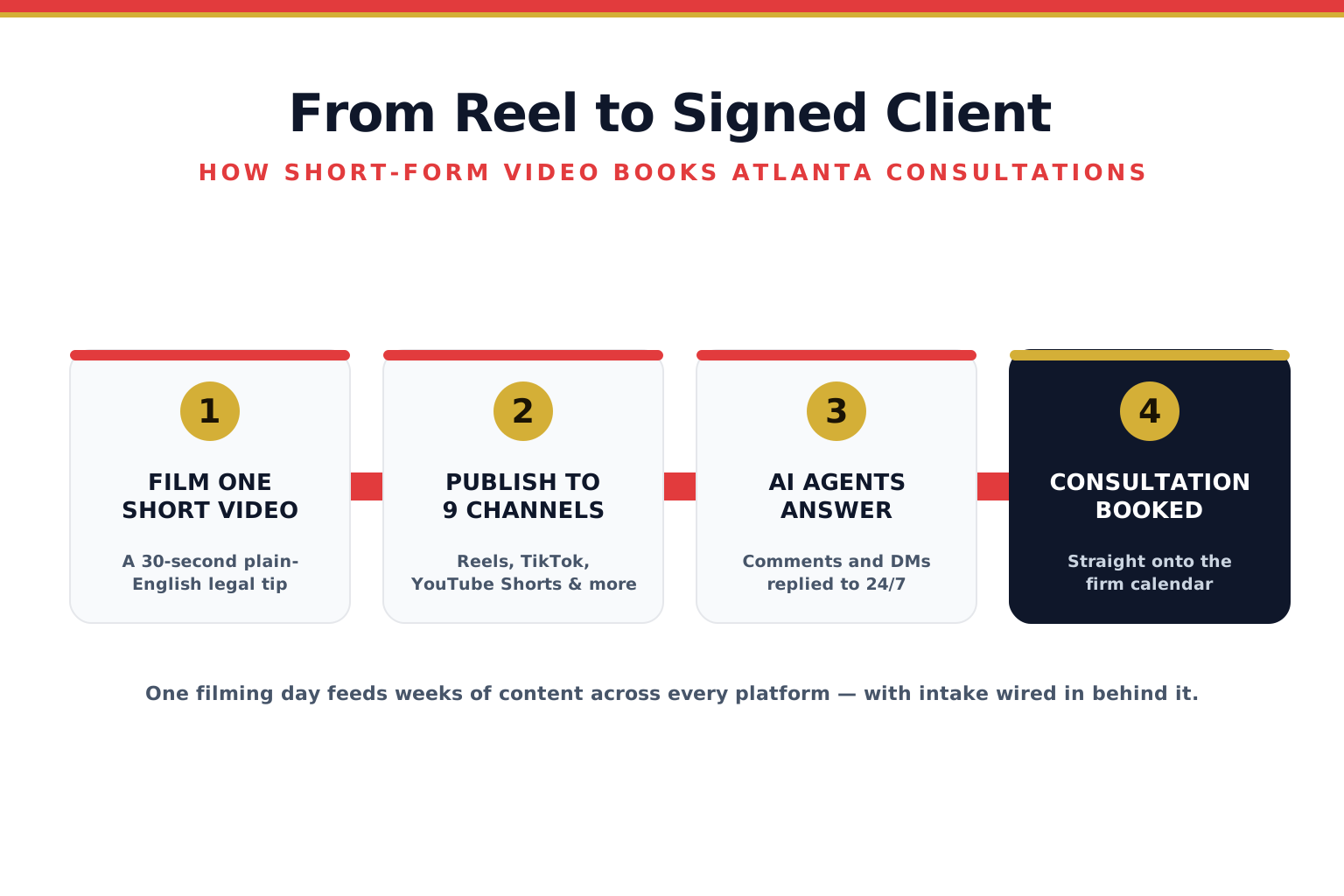
Everything above is achievable in-house — if you have a person who can script, film, edit, caption for nine platforms, schedule, and then answer every comment and DM the content generates. In practice, that’s a designer, a video editor, a social manager, and a community manager combined, which is why most firms start strong and fade by week three. The caseload always wins.
The honest math is about consistency, not talent. Organic reach is a compound game: meaningful lift typically shows up around 3–5 months in, as the algorithms start surfacing your content to new local audiences — and because posting five days a week across nine channels gives you dozens of shots each month, a single reel can break out far sooner. A firm that posts for two months and stops never reaches the part of the curve where it pays off.
That’s the case for done-for-you. Our social media package runs the whole engine for a flat $397/month for one firm (up to four brands for $997/month) — content planned, written in your voice, designed, cropped and captioned per platform, published 5 days a week, with the three AI agents handling comments, DMs, and web chat. No setup fee, cancel with 15 days’ notice, white-label by default so agencies can resell it. If you’d rather see it mapped to your practice area and market first, book a walkthrough and we’ll show you the calendar and the intake flow before you commit. Firms also serious about the review side of trust should pair this with getting more Google reviews and tightening local SEO.
Frequently asked questions
Do Atlanta law firms actually get clients from Reels and TikTok?
Yes, but indirectly and over time. Short-form video's job is discovery — getting your firm in front of thousands of local people who don't know you yet, so you're familiar when they need a lawyer. It rarely produces a signed case the same day; it compounds an audience that turns into calls, DMs, and searches for your name over 3–5 months. The firms that see results are the ones that post consistently and answer fast when the interest comes in.
Is it ethical for a Georgia lawyer to post short-form video?
Yes, within the rules. Video promoting your services is governed by the Georgia Rules of Professional Conduct 7.1–7.5: it must be truthful and not misleading, must not promise or guarantee results, and must respect the solicitation rules. The safe and effective approach is to frame content as public legal education (how the law generally works) rather than advice, and to invite viewers to a consultation for their specific situation. Confirm current requirements with the State Bar of Georgia.
Which platform should an Atlanta firm start with?
Instagram Reels and TikTok give the most non-follower reach for local discovery, and YouTube Shorts adds long-term searchability. The efficient move is not to choose — film once and repurpose the same vertical clip across all of them, plus Facebook, with a platform-appropriate caption. Our service publishes to nine channels from a single content plan for exactly this reason.
How often do we need to post to see results?
Consistency matters far more than any single video. A practical baseline is a few pieces per week for several months. Our done-for-you plan publishes five days a week — one reel, two carousels, one image, and one Q&A post weekly — which both builds the compounding effect and gives you many chances at a breakout reel. Posting sporadically is the most common reason firms conclude 'social doesn't work.'
What happens to the leads a viral video creates?
That's the part most firms get wrong. Clio found only 40% of firms answer the phone and 33% reply to email from prospects, so a spike in DMs and calls leaks out the bottom without an instant-response system. Our package pairs the content with AI agents that reply to comments, answer DMs, qualify by case type, and book consultations onto your calendar 24/7 — so reach turns into booked cases instead of missed messages.
How much does done-for-you law firm social media cost?
Our social media package is $397/month for a single firm brand and $997/month for up to four brands (ideal for multi-location firms or agencies reselling to clients). That includes weekly content across nine channels, publishing five days a week, and three AI agents for comments, DMs, and web chat — with no setup fees, white-label by default, and cancellation on 15 days' notice. See the Social Media page and pricing for full details.
Priya Raghavan is a Legal Marketing & Client Acquisition Lead at Lawyer Snapshot. A former agency director, she managed paid search and Local Service Ads budgets for boutique family law and immigration practices, and now writes about turning clicks — and views — into booked consultations without burning the marketing budget. Lawyer Snapshot is a GoHighLevel automation product for U.S. law firms; it is not a law firm and does not provide legal advice.
Related posts
- Social Media Marketing for Law Firms: The 2026 Playbook That Books Consultations
- Facebook & Instagram DM Automation for Miami Law Firms
- AI Chatbot for Law Firms: How 24/7 Web Chat Wins the Clients Who Won’t Call
- How to Get More Google Reviews for Your Law Firm
- 12 Proven Ways to Get More Clients for Your Law Firm